

Latest News
The “Science Symposium”, one of the key events of the 2025 Future Science Prize Week (“Prize Week”) co-organised by the Future Science Awards Foundation and the Hong Kong Academy of Sciences, is taking place today and tomorrow (24 to 25 October) at the Hong Kong Science Museum.This year’s symposium has invited more than 30 leading international scientists to Hong Kong, including three Nobel Prize laureates, to deliver keynote speeches. Today, Professor Arieh WARSHEL, Nobel Prize Laureate in Chemistry 2013, shared his insights on the past and future of computational biology with symposium participants. Tomorrow, the symposium will feature keynote speeches by David GROSS and Reinhard GENZEL, laureates of the Nobel Prize in Physics in 2004 and 2020, respectively.Professor Arieh WARSHEL, Nobel Prize Laureate in Chemistry 2013, delivered a keynote speech in the Science Symposium, sharing his insights on the past and future of computational biology with participants. (Photo provided by the Future Science Prize)Other guests attending the symposium today included Professor Rob KNIGHT, Wolfe Family Endowed Chair in Microbiome Research at Rady Children’s; Professor Ngaiming MOK, Member, Hong Kong Academy of Sciences, and Edmund and Peggy Tse Professor in Mathematics, Chair of Department of Mathematics, and Director of the Institute of Mathematical Research, The University of Hong Kong; Professor Jun YU, Member, Hong Kong Academy of Sciences, and Assistant Dean, Faculty of Medicine, The Chinese University of Hong Kong; Professor Song SUN, Laureate of 2021 Breakthrough New Horizons in Mathematics Prize, Professor, Institute for Advanced Study in Mathematics, Zhejiang University; and Professor Qilin ZHOU, Laureate of Physical Science Prize of 2018 Future Science Prize, Member, Chinese Academy of Sciences. They engaged in the exchange of research findings across the three major fields of chemistry, life sciences, and mathematics, exploring topics such as the principles of artificial intelligence, the pivotal role of gut microbiome in human health and disease, and perspectives on geometry.The 2025 Future Science Prize Week kicked off today with a two-day Science Symposium gathering top international scientists. (Photo provided by the Future Science Prize)This year marks the 10th anniversary of the Future Science Prize, making it a milestone of exceptional significance. Nearly 500 people attended the first day of the symposium, while many members of the public with an interest in scientific research joined online via live streaming to collectively witness this decade-defining moment. Ms. Man Lei CHEONG, Acting Secretary for Innovation, Technology and Industry of the Hong Kong SAR Government, officiated at the Prize Week Opening Ceremony and delivered a speech. Mr. Kwok Bun LEE, Commissioner for Innovation & Technology, also showed their support by participating in the event.Ms. Man Lei CHEONG, Acting Secretary for Innovation, Technology and Industry of the Hong Kong SAR Government, officiated at the Prize Week Opening Ceremony and delivered a speech. (Photo provided by the Future Science Prize)Professor Dennis Yuk-Ming LO, Co-Chair of the 2025 Future Science Prize Week Program Committee and President of the Hong Kong Academy of Sciences, delivered the welcome address, noting that this year marks both the 10th anniversary of the Future Science Prize and the 10th anniversary of the Hong Kong Academy of Sciences, making it a true "10 x 10" milestone and a double cause for celebration. He stated that this is also the third consecutive year that the Future Science Prize Week has been held in Hong Kong. Professor LO said that this annual scientific event not only showcases the scientific achievements of the Greater China region, highlighting the research strengths across the Chinese Mainland, Hong Kong, Macau, and Taiwan, but also reinforces Hong Kong’s role as an international gateway and academic exchange hub. It fosters interdisciplinary collaboration,facilitates the exchange of top-tier talent, and enhances Hong Kong’s position and influence within the global landscape of innovation and technology. Through a wide range of public science outreach activities, the event also aims to ignite young people’s passion for science, nurture the next generation of innovators, and contribute to the national goal of becoming the “world’s primary centre for science and high ground for innovation”.Professor Dennis Yuk-Ming LO, Co-Chair of the 2025 Future Science Prize Week Program Committee and President of the Hong Kong Academy of Sciences, said that the Future Science Prize Week enhances Hong Kong’s position and influence within the global landscape of innovation and technology and nurtures the next generation of innovators. (Photo provided by the Future Science Prize)The symposium will continue tomorrow with various sessions on physics and computer science. As this year marks the 10th anniversary of the Future Science Prize, a special session will be held tomorrow to explore "How to Run a Successful Prize". This session will feature distinguished guests who are or have been representatives of major international award committees, including Professor Thors Hans HANSSON, Former Chairman of the Nobel Physics Committee; Professor Ehud KEINAN, Council Member at the Wolf Foundation; and Professor Ingrid K. GLAD, Chair of the Board, The Abel Prize.The first day’s session of the Science Symposium on Chemistry featured speakers including Professor Xinyuan LIU (Second Left), Chair Professor, Southern University of Science and Technology; Professor Qilin ZHOU (Second Right), Laureate of the 2018 Future Science Prize in Physical Science; and Professor Zhiwei ZUO (First Right), Professor, Shanghai Institute of Organic Chemistry, Chinese Academy of Sciences. Professor Zuowei XIE (First Left), Member of the 2025 Future Science Prize Week Program Committee served as moderator. (Photo provided by the Future Science Prize)The 2025 Future Science Prize Week events are being live-streamed and can be watched on the official website of the 2025 Future Science Prize Week (https://www.futureprize-hk.org) and on the social media platforms of the Hong Kong Academy of Sciences.The 2025 Future Science Prize Week kicked off today with a two-day Science Symposium gathering top international scientists. (Photo provided by the Future Science Prize)Highlights of the 2025 Future Science Prize (Hong Kong)Details can be found on the official website of the 2025 Future Science Prize Week(https://www.futureprize-hk.org)https://www.bastillepost.com/global/article/5307430-2025-future-science-prize-week-science-symposium-world-renowned-scientists-gather-to-inspire-future-thinking
2025-10-24 23:51
Press ConferenceMORE +
The “Science Symposium”, one of the key events of the 2025 Future Science Prize Week (“Prize Week”) co-organised by the Future Science Awards Foundation and the Hong Kong Academy of Sciences, is taking place today and tomorrow (24 to 25 October) at the Hong Kong Science Museum.This year’s symposium has invited more than 30 leading international scientists to Hong Kong, including three Nobel Prize laureates, to deliver keynote speeches. Today, Professor Arieh WARSHEL, Nobel Prize Laureate in Chemistry 2013, shared his insights on the past and future of computational biology with symposium participants. Tomorrow, the symposium will feature keynote speeches by David GROSS and Reinhard GENZEL, laureates of the Nobel Prize in Physics in 2004 and 2020, respectively.Professor Arieh WARSHEL, Nobel Prize Laureate in Chemistry 2013, delivered a keynote speech in the Science Symposium, sharing his insights on the past and future of computational biology with participants. (Photo provided by the Future Science Prize)Other guests attending the symposium today included Professor Rob KNIGHT, Wolfe Family Endowed Chair in Microbiome Research at Rady Children’s; Professor Ngaiming MOK, Member, Hong Kong Academy of Sciences, and Edmund and Peggy Tse Professor in Mathematics, Chair of Department of Mathematics, and Director of the Institute of Mathematical Research, The University of Hong Kong; Professor Jun YU, Member, Hong Kong Academy of Sciences, and Assistant Dean, Faculty of Medicine, The Chinese University of Hong Kong; Professor Song SUN, Laureate of 2021 Breakthrough New Horizons in Mathematics Prize, Professor, Institute for Advanced Study in Mathematics, Zhejiang University; and Professor Qilin ZHOU, Laureate of Physical Science Prize of 2018 Future Science Prize, Member, Chinese Academy of Sciences. They engaged in the exchange of research findings across the three major fields of chemistry, life sciences, and mathematics, exploring topics such as the principles of artificial intelligence, the pivotal role of gut microbiome in human health and disease, and perspectives on geometry.The 2025 Future Science Prize Week kicked off today with a two-day Science Symposium gathering top international scientists. (Photo provided by the Future Science Prize)This year marks the 10th anniversary of the Future Science Prize, making it a milestone of exceptional significance. Nearly 500 people attended the first day of the symposium, while many members of the public with an interest in scientific research joined online via live streaming to collectively witness this decade-defining moment. Ms. Man Lei CHEONG, Acting Secretary for Innovation, Technology and Industry of the Hong Kong SAR Government, officiated at the Prize Week Opening Ceremony and delivered a speech. Mr. Kwok Bun LEE, Commissioner for Innovation & Technology, also showed their support by participating in the event.Ms. Man Lei CHEONG, Acting Secretary for Innovation, Technology and Industry of the Hong Kong SAR Government, officiated at the Prize Week Opening Ceremony and delivered a speech. (Photo provided by the Future Science Prize)Professor Dennis Yuk-Ming LO, Co-Chair of the 2025 Future Science Prize Week Program Committee and President of the Hong Kong Academy of Sciences, delivered the welcome address, noting that this year marks both the 10th anniversary of the Future Science Prize and the 10th anniversary of the Hong Kong Academy of Sciences, making it a true "10 x 10" milestone and a double cause for celebration. He stated that this is also the third consecutive year that the Future Science Prize Week has been held in Hong Kong. Professor LO said that this annual scientific event not only showcases the scientific achievements of the Greater China region, highlighting the research strengths across the Chinese Mainland, Hong Kong, Macau, and Taiwan, but also reinforces Hong Kong’s role as an international gateway and academic exchange hub. It fosters interdisciplinary collaboration,facilitates the exchange of top-tier talent, and enhances Hong Kong’s position and influence within the global landscape of innovation and technology. Through a wide range of public science outreach activities, the event also aims to ignite young people’s passion for science, nurture the next generation of innovators, and contribute to the national goal of becoming the “world’s primary centre for science and high ground for innovation”.Professor Dennis Yuk-Ming LO, Co-Chair of the 2025 Future Science Prize Week Program Committee and President of the Hong Kong Academy of Sciences, said that the Future Science Prize Week enhances Hong Kong’s position and influence within the global landscape of innovation and technology and nurtures the next generation of innovators. (Photo provided by the Future Science Prize)The symposium will continue tomorrow with various sessions on physics and computer science. As this year marks the 10th anniversary of the Future Science Prize, a special session will be held tomorrow to explore "How to Run a Successful Prize". This session will feature distinguished guests who are or have been representatives of major international award committees, including Professor Thors Hans HANSSON, Former Chairman of the Nobel Physics Committee; Professor Ehud KEINAN, Council Member at the Wolf Foundation; and Professor Ingrid K. GLAD, Chair of the Board, The Abel Prize.The first day’s session of the Science Symposium on Chemistry featured speakers including Professor Xinyuan LIU (Second Left), Chair Professor, Southern University of Science and Technology; Professor Qilin ZHOU (Second Right), Laureate of the 2018 Future Science Prize in Physical Science; and Professor Zhiwei ZUO (First Right), Professor, Shanghai Institute of Organic Chemistry, Chinese Academy of Sciences. Professor Zuowei XIE (First Left), Member of the 2025 Future Science Prize Week Program Committee served as moderator. (Photo provided by the Future Science Prize)The 2025 Future Science Prize Week events are being live-streamed and can be watched on the official website of the 2025 Future Science Prize Week (https://www.futureprize-hk.org) and on the social media platforms of the Hong Kong Academy of Sciences.The 2025 Future Science Prize Week kicked off today with a two-day Science Symposium gathering top international scientists. (Photo provided by the Future Science Prize)Highlights of the 2025 Future Science Prize (Hong Kong)Details can be found on the official website of the 2025 Future Science Prize Week(https://www.futureprize-hk.org)https://www.bastillepost.com/global/article/5307430-2025-future-science-prize-week-science-symposium-world-renowned-scientists-gather-to-inspire-future-thinking
2025-10-24 23:51

Artificial intelligence (AI) is one of the most impactful cutting-edge technologies today, offering limitless development potential when integrated with various scientific fields. As the opening event of the 2025 Future Science Prize Week, the "Science and Technology Forum" – co-organised by The Future Science Awards Foundation, The Hong Kong Academy of Sciences, and the Hong Kong University of Science and Technology (HKUST) – was held today (22 October) at HKUST.Science scholars and industry experts took part in the Science and Technology Forum, the kick-off event of the 2025 Future Science Prize Week, sharing insights on cutting-edge AI technology. (Photo provided by the Future Science Prize)Under the theme “Intelligence Ignites a New Chapter - Opportunities and Challenges of ‘AI+X’", the forum brought together leading scholars and industry leaders to exchange insights and explore the latest developments in AI. The forum aimed to promote vigorous technological advancement across the industry through knowledge exchange.During the Science and Technology Forum, a panel discussion with the title "‘AI+X’ Technologies: Pioneering Interdisciplinary Explorations and Innovations" was held. The session brought together world-renowned scholars to explore how AI can be integrated with other scientific fields to drive interdisciplinary innovation. (Photo provided by the Future Science Prize)Several globally renowned scholars participated in the Forum. Tim Kwang Ting CHENG, Vice President for Research and Development of HKUST, delivered the opening remarks at the event. Other speakers included Wei-Ying MA, Director of Hong Kong Institute of AI for Science at the City University of Hong Kong and Chief Scientist of AI Industry Research (AIR) Institute at Tsinghua University; Mengdi WANG, Director of the Center for AI Innovation at Princeton University; and Le CONG, Assistant Professor of Pathology and Genetics at Stanford University School of Medicine. In addition to keynote speeches, a panel discussion with the theme "‘AI+X’ Technologies: Pioneering Interdisciplinary Explorations and Innovations" was held. The discussion explored how AI can be integrated with other scientific fields to drive interdisciplinary innovation and collaboration.Tim Kwang Ting CHENG, Vice-President for Research and Development at HKUST, delivered the opening remarks, expressing his hope that the forum would foster academic exchange, inspire new ideas and drive vigorous technological advancement across the industry. (Photo provided by the Future Science Prize)Furthermore, the third session of the 2025 Future Science Prize Science Popularisation Series, titled "AI Walk and Talk," was held this morning. Around 100 local secondary and university students visited HKUST’s state-of-the-art laboratories, including the “ISDworks!” makerspace and The Cheng Kar-Shun Robotics Institute (CKSRI). A number of distinguished scientists and researchers also engaged in dialogue with the students, sharing their experiences and insights to encourage young people to take their first steps in exploring the world of science.The third session of the 2025 Future Science Prize Science Popularisation Series — "AI Walk and Talk" — was also held today. Around 100 local secondary and university students visited HKUST’s state-of-the-art research laboratories and engaged in face-to-face exchanges with scientists. (Photo provided by the Future Science Prize)The second day (23 October) of the 2025 Future Science Prize Week will feature the 2025 Asian Young Scientist Fellowship Annual Conference. This year, 12 outstanding young researchers from cities across Asia, including mainland China, Hong Kong, Taiwan and Japan, will be recognised as "Asian Young Scientist Fellows”. Professor Randy SCHEKMAN, laureate of the 2013 Nobel Prize in Physiology or Medicine, will deliver a keynote speech and take part in a panel discussion. The Prize Week events will be live-streamed and can be watched on the official website (https://www.futureprize-hk.org) and the Hong Kong Academy of Sciences’ social media platforms.Science scholars and industry experts took part in the Science and Technology Forum, the kick-off event of the 2025 Future Science Prize Week, sharing insights on cutting-edge AI technology. (Photo provided by the Future Science Prize)Highlights of the 2025 Future Science Prize Week (Hong Kong)Details can be found on the official website of the 2025 Future Science Prize Week(https://www.futureprize-hk.org)https://www.bastillepost.com/global/article/5301394-2025-future-science-prize-week-kicks-off-with-science-and-technology-forum-exploring-opportunities-and-challenges-in-ai#gallery-mainpost-6
2025-10-22 23:46

The Hong Kong Science Museum (HKScM) is presenting the "2025 The Future Science Prize Exhibition" from today (September 30) to October 29 at the G/F Exhibition Hall. Marking the 10th anniversary of the prize, the exhibition is themed around "Past", "Present" and "Future". The exhibition introduces the research and achievements of this year's seven laureates and laureates over the years, as well as relevant scientific concepts. The Future Science Prize, regarded as China's "Nobel Prize", was established by the Future Science Awards Foundation in 2016. Initiated by a group of scientists and entrepreneurs, the prize presents three awards every year, aiming to give recognition to scientists who have achieved outstanding scientific results in the Chinese Mainland, Hong Kong, Macao or Taiwan, with the goal of inspiring China, the world and the next generation with the spirit of science. The Life Science Prize laureates of the Future Science Prize this year are Distinguished Professor at Hebei GEO University, Ji Qiang, and Research Fellows at the Institute of Vertebrate Paleontology and Paleoanthropology of the Chinese Academy of Sciences, Xu Xing and Zhou Zhonghe. They are awarded for their discoveries of fossil evidence for the origin of birds from dinosaurs. The Physical Science Prize is awarded to Research Fellow at the Institute of Physics of the Chinese Academy of Sciences, Fang Zhong; the William M. W. Mong Professor of Nanoscience and Chair Professor of Department of Physics at The Hong Kong University of Science and Technology, Dai Xi; and the Chair Professor of the Tsung-Dao Lee Institute at Shanghai Jiao Tong University, Ding Hong, for their contributions to the computational prediction and experimental realisation of topological electronic materials. Semiconductor scientist, Lu Chihyuan, receives the Mathematics and Computer Science Prize for his innovations and leadership in advancing non-volatile semiconductor memory technologies, including cell density, device integration, and data resiliency. Interactive exhibits are on display to enrich visitors' understanding of the achievements of laureates over the years. "The Game of Life: Stem Cells Edition" showcases the scientific achievements of 2024 the Life Science Prize Laureate, Deng Hongkui, who converted somatic cells into chemically induced pluripotent stem cells using small chemical molecules. The "Resistance Simulator" compares the resistances of copper, iron and superconductor at different temperatures to illustrate the research accomplishments of 2023 the Physical Science Prize Laureates, Zhao Zhongxian and Chen Xianhui, and demonstrate the properties of metals and superconductors. At the "AI Image Recognition Contest", visitors can experience the achievements in image recognition with the technique developed by 2023 the Mathematics and Computer Science Prize Laureates, He Kaiming, Sun Jian, Ren Shaoqing and Zhang Xiangyu. The exhibition also highlights the outstanding contributions of Hong Kong laureates over the years through videos. In addition, the HKScM will organise the Science Symposiums on October 24 and 25, where world-renowned scientists will share scientific discoveries on cutting-edge topics. The laureates of this year will have a dialogue with the youth at the Hong Kong Space Museum on October 26 to interact and share with teenagers. The exhibition is jointly presented by the Leisure and Cultural Services Department, the Future Science Awards Foundation and the Hong Kong Academy of Sciences, jointly organised by the HKScM, the Future Science Awards Foundation and the Hong Kong Academy of Sciences, and funded by the Innovation and Technology Commission. For details of the exhibition and activities, please visit the website at hk.science.museum/en/web/scm/exhibition/fsp.html. The Hong Kong Science Museum is presenting the "2025 The Future Science Prize Exhibition" from today (September 30) to October 29 at the G/F Exhibition Hall to introduce achievements of laureates.The Hong Kong Science Museum is presenting the "2025 The Future Science Prize Exhibition" from today (September 30) to October 29 at the G/F Exhibition Hall to introduce achievements of laureates. Photo shows the interactive exhibit "The Game of Life: Stem Cells Edition". Visitors can learn about the scientific achievements in stem cell research of 2024 the Life Science Prize Laureate, Deng Hongkui.The Hong Kong Science Museum is presenting the "2025 The Future Science Prize Exhibition" from today (September 30) to October 29 at the G/F Exhibition Hall to introduce achievements of laureates. Photo shows the interactive exhibit "Resistance Simulator". Visitors can compare the resistances of copper, iron and superconductor at different temperatures, gaining insights into the research accomplishments of 2023 the Physical Science Prize Laureates, Zhao Zhongxian and Chen Xianhui, and understand the properties of metals and superconductors.The Hong Kong Science Museum is presenting the "2025 The Future Science Prize Exhibition" from today (September 30) to October 29 at the G/F Exhibition Hall to introduce achievements of laureates. Photo shows the interactive exhibit "AI Image Recognition Contest". Visitors can experience the achievements in image recognition with the technique developed by 2023 the Mathematics and Computer Science Prize Laureates, He Kaiming, Sun Jian, Ren Shaoqing and Zhang Xiangyu.The Hong Kong Science Museum is presenting the "2025 The Future Science Prize Exhibition" from today (September 30) to October 29 at the G/F Exhibition Hall to introduce achievements of laureates. The exhibition highlights the outstanding contributions of Hong Kong laureates over the years through videos.
2025-09-30 23:26
Interview with LaureatesMORE +
News and InsightsMORE +

Source: The Government of the Hong Kong Special Administrative Region - Press ReleaseThe Hong Kong Science Museum (HKScM) is staging "2024 The Future Science Prize Exhibition" from today (October 4) to November 4 at the G/F Exhibition Hall, introducing the Future Science Prize, the Hong Kong scientists who had won the Prize over the years and the laureates of this year. It also showcases exhibits related to their research, allowing visitors to know more about their research journey and achievements while learning about the scientific concepts involved. The Future Science Prize, also regarded as China's "Nobel Prize", was established by the Future Science Awards Foundation in 2016. Initiated by a group of scientists and entrepreneurs, the prize aims to give recognition to scientists who have achieved outstanding scientific results on the Mainland and in Hong Kong, Macau or Taiwan, with the goal of inspiring China, the world and the next generation with the spirit of science. Three awards are presented, including the Life Science Prize, the Physical Science Prize, and the Mathematics and Computer Science Prize. Through panels, comics, videos and an interactive programme, the first zone of the exhibition shows the background, awards, selection process and laureates of the Future Science Prize over the past years. The second zone introduces five Hong Kong scientists who had been awarded the Future Science Prize in the past years, including 2016 the Life Science Prize Laureate Dennis Lo Yuk-ming, 2019 the Physical Science Prize Laureate Luk Kam-biu, 2021 the Life Science Prize Laureates Yuen Kwok-yung and Joseph Sriyal Malik Peiris, and 2022 the Mathematics and Computer Science Prize Laureate Mok Ngai-ming. Interactive exhibits related to their research are on display. Among them, visitors can take on the role of a doctor in the touchless interactive game "Decoding Plasma Cell-free DNA" to tell the foetal gender or potential chromosomal abnormalities in the fetus by arranging the DNA acquired from the plasma of pregnant women, so that they can know more about the principles behind the Non-invasive Prenatal Test developed by Professor Dennis Lo. The concept of the other interactive exhibit "Catch an Antineutrino" originates from highly stable liquid scintillators created by Professor Luk Kam-biu and collaborators for detecting antineutrinos. Through this interactive exhibit, visitors can simulate the emission of blue light by the liquid scintillator as it is excited by antineutrinos. The third zone introduces the four scientists who were awarded the Future Science Prize this year, including the Life Science Prize Laureate Deng Hongkui, the Physical Science Prize Laureates Zhang Tao and Li Yadong, and the Mathematics and Computer Science Prize Laureate Sun Binyong, as well as their research achievements and contributions. The one-month exhibition will take place alongside the 2024 Future Science Prize Week, which will be held from October 30 to November 3. Two of the activities will be held at the HKScM. In Science Symposiums, world-renowned scientists will share scientific discoveries on cutting-edge topics and explore interdisciplinary and innovative academic insights. In 2024 Future Science Prize Laureates' Dialogue with the Youth, teenagers can exchange ideas with the scientists in person and gain inspiration in science. Other activities include Science and Technology Forum, 2024 Asian Young Scientist Fellowship Annual Conference, and 2024 Future Science Prize Award Ceremony. The exhibition is presented by the Leisure and Cultural Services Department, the Future Science Awards Foundation and the Hong Kong Academy of Sciences; organised by the HKScM, the Future Science Awards Foundation and the Hong Kong Academy of Sciences; and funded by the Innovation and Technology Commission. For details of the exhibition and activities, please visit hk.science.museum/en/web/scm/exhibition/fsp.html or call 2732 3232 for enquiries.Photo:Photo shows (from left) the Museum Director of the HKScM, Mr Lawrence Lee; the 2016 Life Science Prize Laureate, Professor Dennis Lo; and the Curator (Development) of the HKScM, Mr Samuel Chui.Photo shows the 2016 Life Science Prize Laureate, Professor Dennis Lo, at the exhibition area showcasing his research.Photo shows the touchless interactive game "Decoding Plasma Cell-free DNA", allowing the public to learn more about the principles behind the Non-invasive Prenatal Test developed by the 2016 Life Science Prize Laureate, Professor Dennis Lo.Photo shows the interactive exhibit "Catch an Antineutrino". The concept of the exhibit originates from highly stable liquid scintillators created by 2019 the Physical Science Prize Laureate, Professor Luk Kam-biu, and collaborators for detecting antineutrinos.Photo shows the exhibition area about the four scientists who were awarded the Prize this year and their research.The Hong Kong Science Museum launched "2024 The Future Science Prize Exhibition" today (October 4).via: https://www.info.gov.hk/gia/general/202410/04/P2024100400194.htm
2024-10-04 21:54
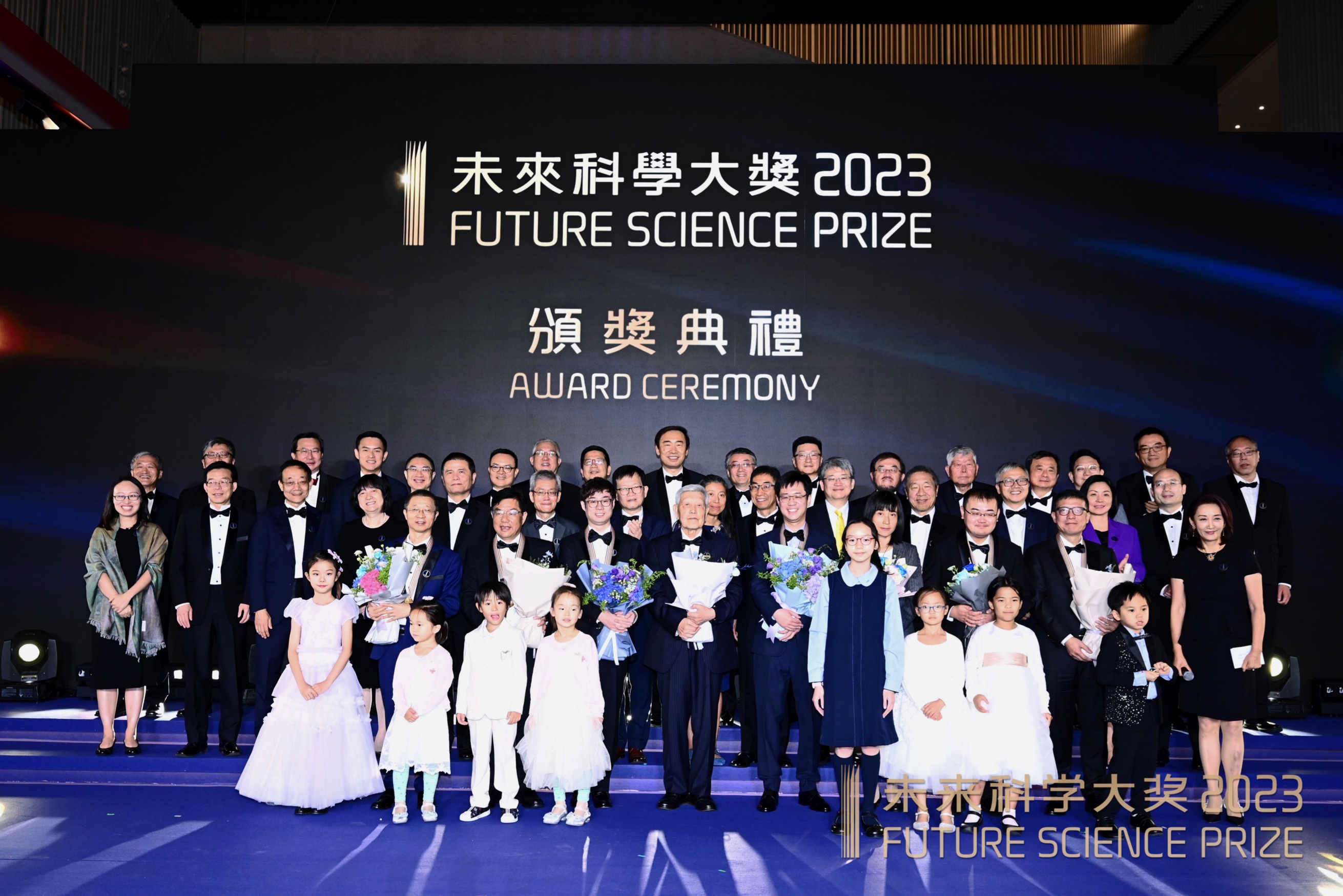
On the afternoon of October 17, the 2023 Future Science Prize Award Ceremony was held at the Hong Kong Palace Museum.2023 Future Science Prize - Life Science Prize Laureates Jijie Chai and Jian-Min Zhou; Physical Science Prize Laureates Zhongxian Zhao and Xianhui Chen; and Mathematics and Computer Science Prize Laureates Kaiming He, Shaoqing Ren and Xiangyu Zhang attended the Ceremony.Nearly 300 people, including past laureates of the Future Science Prize, donors of the Future Science Prize, Members of Future Forum Council, Members of the Future Science Prize Science Committee, Supervisory of the Future Science Prize, and representatives of top scientists and young scientists from universities, institutes and scientific research institutes all over the world, gathered to praise the scientific achievements of the laureates! At the same time, millions of viewers from all over the world witnessed this honorable moment through the live broadcast online!Eight laureates witness the development of science across the timesIn his speech, Mr Richard Liu, Chairman of 2023 Future Science Prize Donor’s Congress said that it is essential to give more attention and stronger support to scientists, who are the most curious and reflective representatives of mankind, which is also the original intention and significance of the Future Science Prize. Future Science Prize this year focuses on the most cutting-edge breakthroughs in the fields of plant immunology, high-temperature superconductivity, and artificial intelligence, and the laureates include senior scientists as well as a number of young scientists. 2023Future Science Prize witnesses scientists of different ages and generations making groundbreaking contributions to the cause of science that have a global impact. "Science is the key to the future, let's keep this curiosity, imagination, and faith in science, spreading the love of science to more people, influencing more people to participate in the cause of science, and work together to realize the progress of mankind!" Richard Liu said.Prof. Kun-Liang Guan, Chairman of 2023 ScienceCommittee of the Future Science Prize, said in his speech that Future Science Prize this year is special. First of all, this year's unprecedented number of eight laureates is the largest number of winners in a single year. Secondly, this year's laureates span multiple generations, with their birthdays ranging from the 1940s to the 1990s, which demonstrates the spanning of time and the continuous development of science. Third, this year's laureates cover a wide range of scientific fields, including plant disease resistance in the life sciences, high-temperature superconductivity in the physical sciences, and artificial intelligence in mathematics and computer science. Their work has led to breakthroughs in scientific research and technological applications in these fields that will profoundly affect our lives and our future.Honor the awarded scientists Praise the Spirit of ScienceIn the presence of guests and millions of online viewers, 2023 Future Science Prize -"Life Science Prize", "Physical Science Prize" and "Mathematics and Computer Science Prize" were presented one after another.Life sciences, like the source of life, nourish our desire for knowledge and pursuit of truth and suggest to us the endless wonders and possibilities of the living world.Jijie Chai and Jian-Min Zhou were awarded the Life Science Prize for the discovery of resistosomes and elucidation of their molecular structures and functions in plant immune responses against pathogens. Prof. Xinnian Dong, Member of the Science Committee of the Future Science Prize, read out the citation of the Life Science Prize, and together with Prof. Kun-Liang Guan, Chairman of 2023 Science Committee of the Future Science Prize, and Prof. Hening Lin, Prof. Yi Rao and Prof. Yi Zhang, Members of the Science Committee of the Future Science Prize, presented the trophies, medals, and certificates to the laureates of the Future Science Prize, namely, Jijie Chai and Jianmin Zhou.In his acceptance speech, Prof. Jijie Chai expressed his gratitude to the Science Committee, to Prize Donors for their respect for science and the sentiment of basic research, and to his own group members and the team of Prof. Jian-Min Zhou, his partner who has been a pleasant collaborator with him spanning 20 years. In his acceptance speech, Prof. Jian-Min Zhou said that agriculture is the ballast of China's stable development, and he is especially grateful to the Science Committee of the Prize for their attention to agricultural science!A major research breakthrough in any physical discipline becomes a landmark change in the development of human society. The physical sciences have revealed many mysteries and given us a deeper understanding of the world.Zhongxian Zhao and Xianhui Chen were awarded - Physical Science Prize for their seminal breakthroughs in the discovery of high-temperature superconducting materials and systematic advancements in elevating the transition temperature. Prof.Xie Chen, Memberof the Science Committee, read out the citationand presented the trophy, medal, and certificate to the two laureates together with Mr. Feng Deng and Mr. Ying Wu, the donors of the Future Science Prize, and Prof. Li Deng, Prof. Douglas Nelson Chao LIN and Prof. Yuk Ling YUNG, the Members of the Science Committee of the Future Science Prize.Professor Zhongxian Zhao said in his acceptance speech that superconductivity was discovered in 1911, and the liquefaction of helium was realized before that in 1908, which laid the foundation for the discovery of superconductivity. It was only in 1959 that China had a helium liquefier, a full 50 years later than internationally, and experimental research on superconductors began from then on. Not only did we participate in and contribute to the two major breakthroughs, but we also had a sizable and talented team, which was very gratifying to me. To this day, superconductivity, still a field full of challenges and discoveries, has now been taken up by the younger generation. I am willing to be a paving stone to make new contributions to the promotion of superconductivity in China, in terms of scientific and technological self-reliance, national rejuvenation, and human civilization!Prof. Xianhui Chen said in his acceptance speech that I can achieve what I have achieved now, thanks to the great era in which we grew up, and thanks to the booming development of the national economy. After so many years of accumulation, deepening understanding and knowledge of high-temperature superconductivity, experimental conditions, and the continuous accumulation of talent team, I believe that our scientists in the future, in the field of superconductors will be found to have a significant impact, and even go to explore the room-temperature superconductors, to contribute to the development of human civilization and science.Mathematics and computer sciences are both a playground for human thinking, revealing to us the endless possibilities of information and knowledge with endless innovation and in-depth research.Kaiming He, Jian Sun (deceased), Shaoqing Ren, and Xiangyu Zhang were awarded Mathematics and Computer Science Prize for fundamental contributions to artificial intelligence by introducing deep residual learning. Prof. Dawn Song, Member of the Science Committee of the Future Science Award, read the citation, and together with the donors of the Future Science Prize, Mr. Richard Liu, Mr. Victor Wang , and Mr. David Yu, as well as the members of the Science Committee of the Future Science Prize, Prof. Chi-Wang Shu, Prof. Jeff Xia, and Prof. Shou-Wu Zhang, they jointly presented trophies, medals, and certificates to Dr. Kaiming He, Dr. Shaoqing Ren, and Dr Xiangyu Zhang.In his acceptance speech, Kaiming He said that in the past decade or so, artificial intelligence has started a huge revolution. This revolution is profoundly affecting all aspects of human social life. I am very lucky to be able to witness and participate in this AI revolution. At the heart of this revolution are artificial neural networks and deep learning, methods that have had many ups and downs over the past half-century or so. One of the major reasons for this is that the depth of artificial neural networks is limited. Our award-winning work, an approach called Deep Residual Learning, can help artificial neural networks break through a long-standing bottleneck in depth. This allows our work to be one of the key foundations of the current AI revolution.In his acceptance speech, Shaoqing Ren expressed his gratitude to this era for promoting the rapid development of computer-related sciences, the exponential development of the amount of data and computational power has made the impossible possible, and usable has become usable; the development of the open source spirit and open source community has enabled more and more researchers and engineers to stand on the shoulders of their predecessors to explore the higher peaks, and even individual researchers can do good work on their personal computers, and this has also enabled more and more people who are interested in science and technology and exploration to take part in this great era.Xiangyu Zhang said in his acceptance speech that looking back at the history of AI, deep learning centered on large-scale deep neural networks has made rapid progress over the past decade, igniting a new round of AI technology revolution. One of the most important questions is how to make neural networks benefit from Scaling up. Our work focuses on the dimension of depth, and we are fortunate to have found a very simple and effective method, such as residual learning, to dramatically increase the depth of neural networks while avoiding the problem of performance saturation. It's great to see that the core ideas of ResNet and residual learning are still widely used today, many years later. For me, it was an honor to contribute to the development of the field early in my academic career.Future Concert The fusion of science and musicScience studies the world in a rigorous manner, revealing objective laws through experimentation and data analysis. Music, on the other hand, expresses the world in an emotional way, conveying emotions and moods through melody, rhythm, and timbre.During the Award Ceremony, a unique Future Concert allowed the audience to appreciate the charm of the "interdisciplinary" fusion of science and art.The Shenzhen Poly International Youth String Orchestra - Bach Ensemble and String Orchestra's Marco Reich, Li Xinya, and Kuang Yuxuan brought their cello and violin performances respectively.Famous soprano and winner of the World Outstanding Chinese Artist Award, Wang Bingbing, sang "O Mio babbino caro - My Dear Father" live.A powerful and emotional song "Under the Lion Rock" was presented by the children of the Fukien Secondary School Affiliated School Choir.At the end of the Award Ceremony, Cathy Wu, Secretary General of the Future Science Awards Foundation and initiator and Secretary General of the Future Forum, expressed her gratitude in her closing speech to all the Science Committee members and Supervisors, Donors, Future Forum Councils and Institutional Councils, Young Scientist members, all the scientistists participating in the Future Science Prize Week, as well as to the millions of science enthusiasts and viewers online. Shealso expressed her sincere gratitude to the co-organizer of the event, the Hong Kong Academy of Sciences, all strategic partners, designated hotels for scientists, exclusive airlines, partners, supporting organizations, media partners, funding agencies, etc. (see below for more details) for their support.The Future Science Prize is a privately funded science prize initiated in 2016 by a group of scientists and entrepreneurs. It is established to reward scientists who have made outstanding scientific achievements in the Chinese mainland, Hong Kong, Macao, or Taiwan. Currently, the Future Science Prize consists of three major awards: the Life Science Prize, the Pysical Science Prize, and the Mathematical and Computer Science Prize. To date, 35 laureates have been awarded for the Future Science Prize, all of whom are highly accomplished scientists from the basic and applied research fields of life sciences, physics, chemistry, mathematics, and computer science, who have made original research work that has had a great international impact.
2023-10-17 20:56

On the morning of October 17, the 2023 Future Science Prize Laureates' Dialogue with Youth was held at the Hong Kong Palace Museum.The laureatesof the 2023 Future Science Prize- Life SciencePrize, Jijie Chai and Jian-Min Zhou; the laureates of the Physical SciencePrzie, Zhongxian Zhao and Xianhui Chen; and the laureates of the Mathematics and Computer SciencePrize, Shaoqing Ren and Xiangyu Zhang, attended the event to give a presentation on popularization of science to nearly 300 young people, and to share with them their own stories of growing up, pursuing their studies, and conducting scientific researches.At the scene, students from the Hong Kong Subsidized Secondary Schools Council, the Hong Kong Direct Subsidy Scheme Schools Council, the Heads of Government Secondary School Heads Association and 20 secondary schools in Hong Kong, students from the "Distinguished Master Accomplished Students" Mentorship Programme of the Hong Kong Academy of Sciences, the Founder Dean of Bloom KKCA Acadamy and students from the Academy, students from the Maryknoll Secondary School invited by KUIST, as well as children from the mountainous schools of the Teach For China program and many teenagers from Chinese Mainland and Hong Kong watched the event via webcast, allowing them to experience the charm of science at the same time.A group of scientists had in-depth exchanges with the students, hoping to inspire young people to love science and master innovative thinking methods, thus stimulating their infinite creativity and imagination.Jijie Chai and Jian-Min Zhou: Protecting Plant Health and Bringing Benefits to HumanityJijie Chai and Jian-Min Zhou, laureatesof the 2023 Future Science Prize-Life SciencePrize, gave science presentations to teenagers and exchange views with them.Xianhui Chen and Zhongxian Zhao: Emancipating our minds and breaking throughtraditionsZhongxian Zhao and Xianhui Chen, laureates of the 2023 Future Science Prize-Physical SciencePrize, gave presentations to teenagers and exchange views with them.Shaoqing Ren and Xiangyu Zhang: Continuing to Explore and Turning Science Fiction into RealityThe laureates of the 2023 Future Science Prize - Mathematics and Computer Science Prize, Shaoqing Ren and Xiangyu Zhang, gave science presentations to teenagers and exchange views with them.Nobel Laureate - Prof. Michael Levitt Answers Questions from Teenagers via VideoMichael Levitt, Robert W. And Vivian K. Cahill Professor of Cancer Research and Professor, By Courtesy, of Computer Science, Stanford University, and 2013 Nobel Prize Laureate in Chemistry, was specially invited to answer questions from teens via video-"Where does the inspiration to do scientific research usually come from?"Prof. Michael Levitt says that inspiration essentially means creativity, it's a magical thing, and no one knows where it comes from, most of the time it will come to us in the shower while walking the dog, while cooking, or even while dreaming. I don't know where inspiration comes from either, but I do know that it doesn't come from when you're trying to find it, usually it can arise while resting or while doing something unimportant."I always tell the people I work with that you shouldn't work so hard; you should have more time to go to the movies, go for a walk, exercise or play games. Socializing is also important, and we often generate new ideas in conversation, especially between people from different disciplinary backgrounds." Professor Michael Levitt spoke.Science popularizer and Associate Professor of the Hong Kong University of Science and Technology, Wang Yi, as an invited MC, said that the Future Science Prize has set up a platform for young people to directly communicate with world-class scientists, and through the dialogues and exchanges, they can feel the scientists' spiritual qualities of selfless dedication and courageous exploration, hoping that the event can ignite the spark of science in the hearts of the students, and that as a young generation, we should pass on the spirit of science and be courageous and innovative, so as to use our own wisdom and strength to create a brighter future!
2023-10-17 12:38
Inspiration InitiativeMORE +